Accessibility Audit
Client
Fitness Influencer
Date
2024
Industry
Health & Fitness
My Role
Accessibility Audit
UI Design
Problem Space
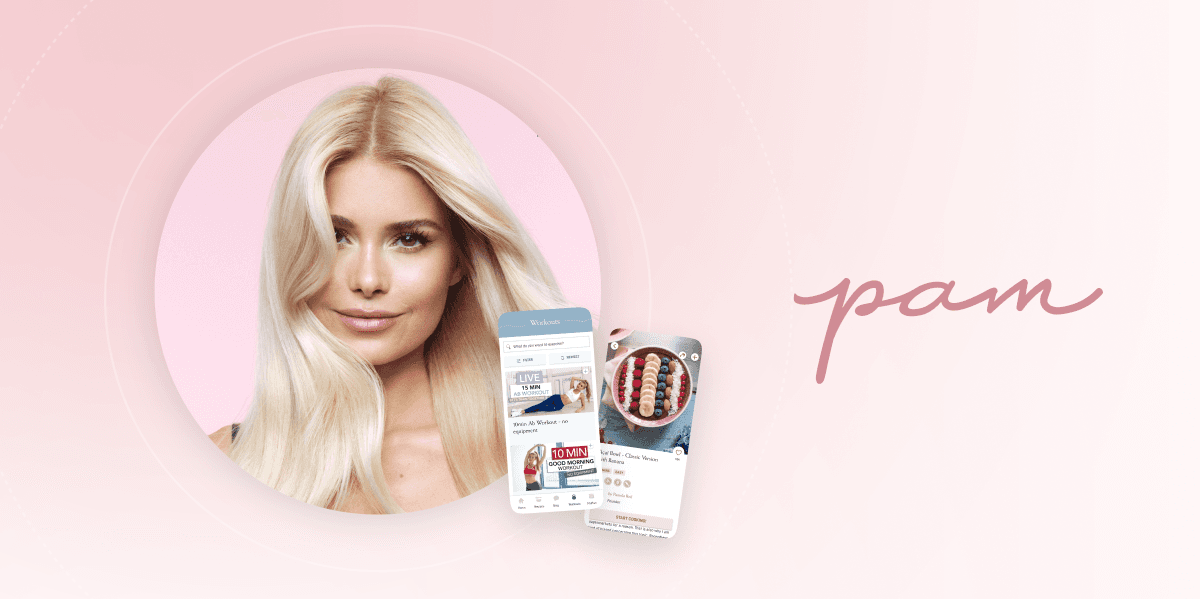
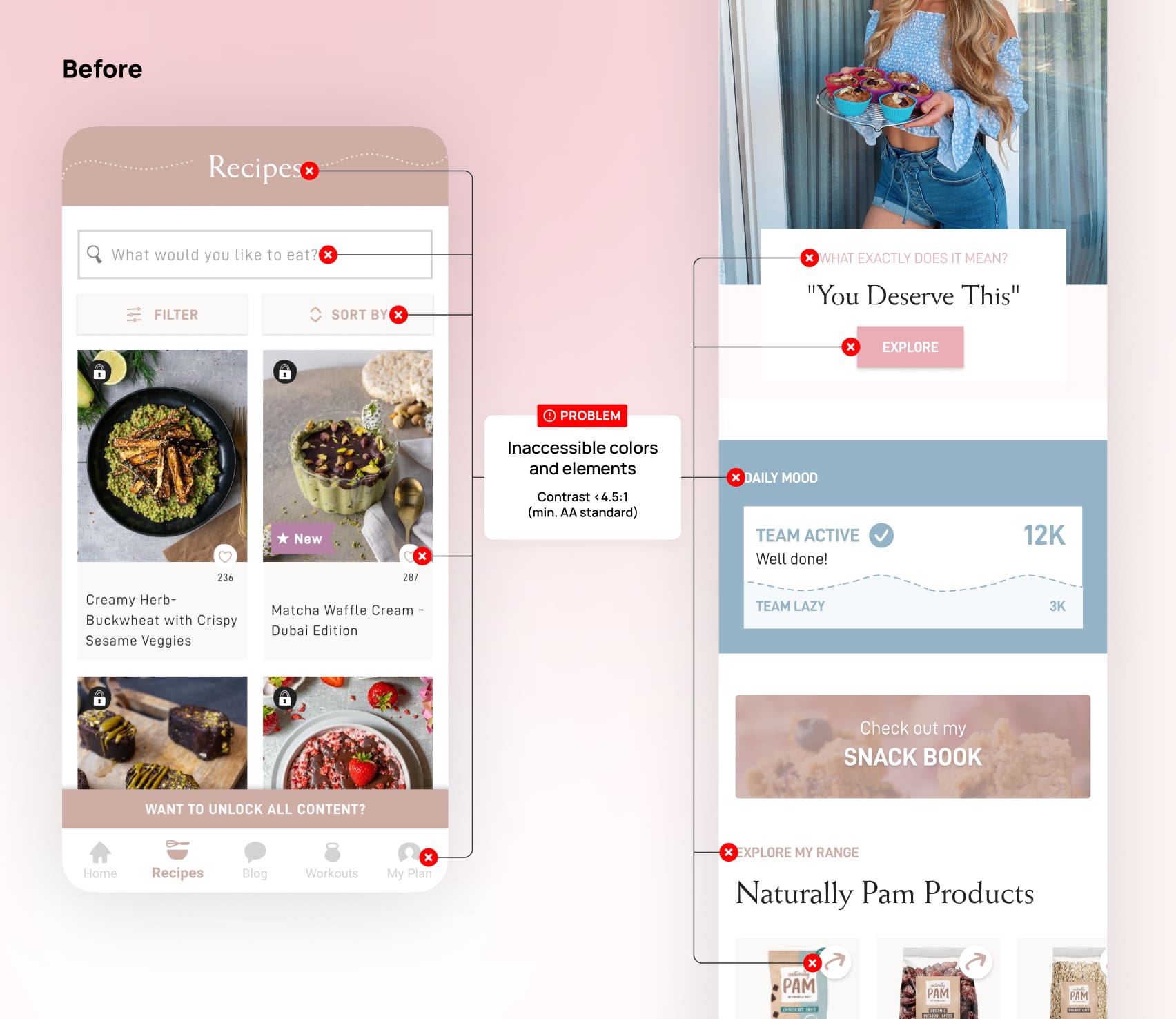
The Pam app was developed for a famous German fitness influencer Pamela Reif. It was originally designed several years ago and featured a bright pastel visual style. While visually appealing and on-brand, it did not meet the new accessibility standards required by the upcoming European Accessibility Act (EAA). The client approached us to ensure the app could be made compliant without losing its aesthetic character.
My Role
As a UX designer with a focus on accessibility, I contributed to the project by conducting an accessibility audit centered on visual contrast and readability, collaborating closely with the development team to implement smart adjustments, and providing guidance to help ensure that future design decisions remain compliant.
Process
Audit & Analysis
The app was evaluated using WCAG 2.1 standards, focusing on colour contrast across key UI elements (text, buttons, tags, etc.).
Areas where the app didn’t meet the minimum contrast ratios were documented.
Smart Adjustments
The app used soft pastels and subtle tones, so switching wholesale to high-contrast colours would have broken the look & feel.
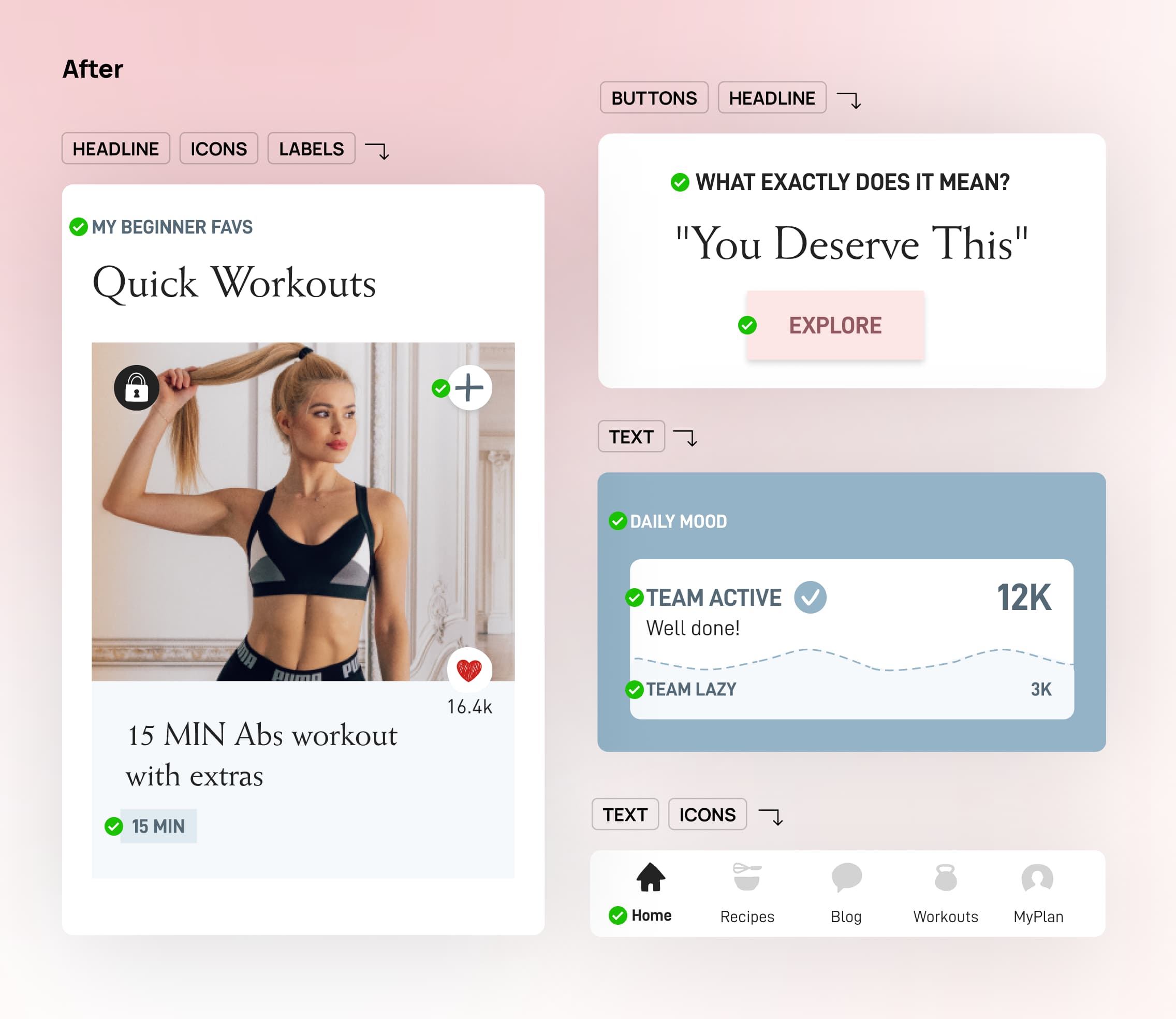
Instead of global changes, only key elements (e.g. bottom navigation) were adjusted to meet contrast standards while preserving look & feel.
Collaboration & Handoff
The audit was done in close collaboration with the development team to define how and where to apply updates.
The deliverables included annotated mockups and an WCAG-compliant updated design system.
The updates improved accessibility and usability without compromising the product’s visual identity.
Outcome
The review led to a set of targeted design updates that improved accessibility without compromising the app’s visual identity. By finding a balance between compliance and style, the app now better supports users with visual impairments while maintaining its original aesthetic. The updated designs were well-received by both the team and stakeholders.